Imagine returning home after a heavy rainstorm in Cincinnati, only to find water pooling in your basement and a musty smell lingering in the air. This nightmare scenario is all too common in our humid Ohio climate, where water damage from burst pipes, storms, or sewage backups can quickly lead to mold growth. As a homeowner in areas like Hyde Park or Over-the-Rhine, you know how unpredictable the weather can be—spring floods along the Ohio River or summer thunderstorms can turn your safe haven into a health hazard.
At Cincinnati Water Damage Restoration, we’ve helped countless families in the Greater Cincinnati area mitigate these risks. Mold isn’t just an unsightly problem; it can compromise your home’s structure and your family’s health. In this comprehensive guide, we’ll explore the dangers of mold after water damage, share practical tips tailored to Cincinnati homes, and explain when professional intervention is crucial. Whether you’re dealing with a recent flood in Avondale or preventive measures in Kenwood, these insights will empower you to act swiftly and safeguard your property.
Understanding Mold Risks After Water Damage
Water damage is a silent intruder that sets the stage for mold proliferation. In Cincinnati’s variable climate, where humidity levels often hover above 60%, mold spores thrive in damp environments, multiplying rapidly within 24-48 hours of water exposure.
How Water Damage Leads to Mold Growth
Mold requires three elements to flourish: moisture, warmth, and an organic food source like drywall, wood, or carpet. A leaky roof during a Middletown downpour or a burst pipe in your Over-the-Rhine rowhouse provides the perfect breeding ground. Hidden moisture behind walls or under floors is especially insidious, as it goes unnoticed until black mold patches appear.
According to the EPA, even small water intrusions can lead to extensive mold if not addressed promptly. In Cincinnati, where basements are common due to the hilly terrain, groundwater seepage exacerbates the issue. We’ve seen cases where untreated water damage from storm damage recovery in Hyde Park neighborhoods resulted in costly remediation.
Health Risks Associated with Mold Exposure
Mold isn’t just a cosmetic concern—it’s a potential health threat. Exposure to mold spores can trigger allergic reactions, asthma attacks, and respiratory issues, particularly in children, the elderly, and those with compromised immune systems. Stachybotrys chartarum, or “black mold,” produces mycotoxins that may cause chronic fatigue, skin rashes, and even neurological symptoms.
In a city like Cincinnati, with its high pollen counts and industrial history, residents in areas like Avondale may already face elevated respiratory risks. A study by the CDC highlights that indoor mold exposure contributes to over 21 million allergy cases annually in the U.S. If you’ve experienced water damage, ignoring mold can lead to long-term health complications for your family.
Immediate Steps to Take After Water Damage
Time is of the essence when water invades your home. Acting within the first 24 hours can prevent mold from taking hold. Here’s how to respond effectively in a Cincinnati household.
Stop the Water Source Immediately
First, identify and halt the source of the water. If it’s a burst pipe restoration issue from freezing winter temperatures common in Kenwood, shut off your main water valve. For sewage-related floods, avoid contact and evacuate if necessary—call professionals for sewage cleanup to handle contaminants safely.
In Cincinnati’s older homes, particularly in historic districts like Over-the-Rhine, outdated plumbing can fail unexpectedly. Document the damage with photos for insurance claims, but prioritize safety.
Remove Standing Water and Dry the Area
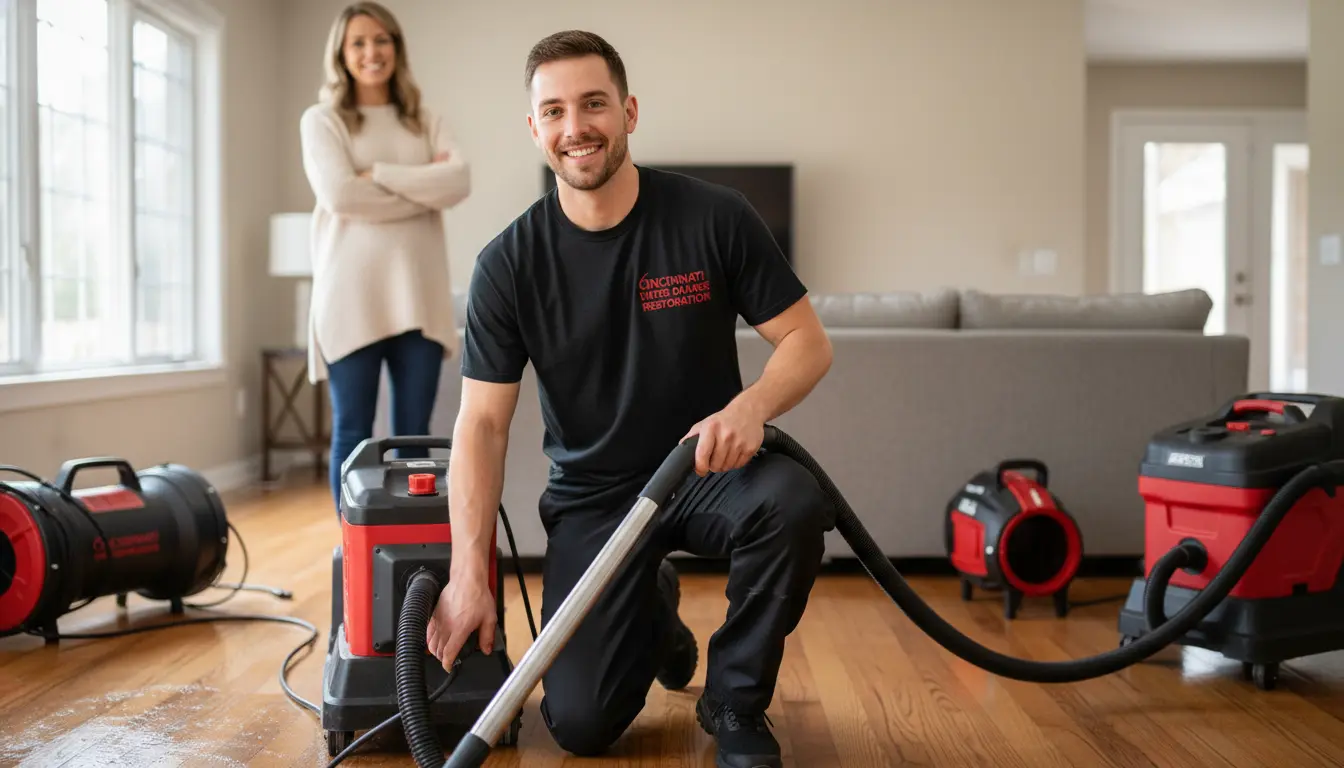
Use wet vacuums, pumps, or towels to extract visible water. Open windows and doors for ventilation, but in humid Cincinnati summers, this might not suffice. Invest in or rent fans and dehumidifiers to circulate air and reduce moisture.
For thorough drying, consider dehumidification services from experts who use industrial-grade equipment. In our experience serving Middletown families, improper drying often leads to hidden mold in crawl spaces.
Preventing Mold Growth in Your Cincinnati Home
Prevention is your best defense against mold. Tailor these strategies to Cincinnati’s unique environmental challenges, like high humidity from the river valley and frequent precipitation.
Enhance Ventilation and Air Circulation
Good airflow is key to deterring mold. Install exhaust fans in bathrooms and kitchens, especially in compact Hyde Park bungalows where steam from showers can linger. Use ceiling fans or attic vents to prevent condensation buildup.
During Cincinnati’s muggy months, run your HVAC system with clean filters to maintain indoor humidity below 50%. Regularly inspect and clean gutters to avoid roof leaks— a common issue after intense storms in Avondale.
Monitor and Control Humidity Levels
Humidity monitors are inexpensive tools that alert you to rising moisture. Aim for 30-50% relative humidity. In basements prone to flooding near the Little Miami River, place silica gel packs or desiccants in storage areas.
For proactive detection, thermal imaging inspection can reveal moisture pockets invisible to the naked eye. We’ve used this technology in Kenwood homes to prevent mold before it spreads.
Regular Maintenance and Inspections
Schedule annual inspections of your home’s vulnerable areas: roofs, foundations, and plumbing. In Cincinnati’s clay-heavy soil, foundation cracks can allow water intrusion—seal them with waterproof caulk.
Clean and repair any water-damaged materials promptly. For instance, after a storm in Over-the-Rhine, remove and replace soaked carpets to avoid spore traps.
Signs of Mold Infestation and When to Call Professionals
Early detection saves time and money. Watch for musty odors, discolored walls, or warped materials. If you spot these in your Middletown residence, don’t DIY large-scale removal—mold can release spores into the air during disturbance.
Professional remediation is essential for infestations over 10 square feet. At Cincinnati Water Damage Restoration, our IICRC-certified team uses HEPA vacuums, antimicrobial treatments, and containment protocols to safely eliminate mold. Serving neighborhoods from Hyde Park to Avondale, we respond 24/7 to restore your home safely.
In cases involving structural damage, like after a burst pipe in historic homes, our experts assess and repair to prevent recurrence.
FAQ: Common Questions About Mold After Water Damage
How Quickly Does Mold Grow After Water Damage?
Mold can begin growing within 24-48 hours in warm, humid conditions like those in Cincinnati. The sooner you dry the area, the better.
Can I Remove Mold Myself in a Small Area?
For minor surface mold (under 10 sq ft), yes—use a bleach solution and protective gear. However, for extensive growth, hire professionals to avoid health risks and incomplete removal.
Does Homeowners Insurance Cover Mold Remediation?
It depends on the policy. Water damage from covered perils like storms is often included, but neglect or floods may require separate coverage. Contact your insurer and our team for guidance.
How Can Cincinnati’s Weather Affect Mold Risks?
High humidity and frequent rains increase vulnerability. Homes near the Ohio River, like in Over-the-Rhine, face higher groundwater risks—proactive measures are crucial.
What If Water Damage Is from Sewage?
Sewage introduces bacteria and pathogens, making mold secondary to health hazards. Immediate professional sewage cleanup is non-negotiable.
Conclusion: Protect Your Cincinnati Home Today
Mold after water damage is a preventable threat, but it demands quick action and informed strategies. From understanding risks to implementing ventilation tips, these Cincinnati-specific insights equip you to maintain a healthy home. Remember, in our river city, where weather whims can strike anytime, vigilance is key.
Don’t let mold compromise your sanctuary. If you’ve experienced water damage in Kenwood, Hyde Park, or beyond, contact Cincinnati Water Damage Restoration for expert assessment and restoration. Our local team is ready to help—call us at (513) 650-7150 or visit our Hyde Park service page to schedule an emergency response. Your family’s safety starts with us—act now for a mold-free future.